
5 Superpowers Only Gamers Unlock in Real Life: Science Says
Gamers do more than rack up high scores. They unlock superpowers that spill into everyday life. Science confirms five specific abilities that regular players develop through consistent play. These gains are not hype. They come from measurable brain changes shown in controlled studies and brain scans.
Lightning-Fast Reflexes
Action video games train your brain to process information and respond in milliseconds. Gamers consistently beat non-gamers in reaction-time tests. The difference is real and repeatable.
The landmark study on action video games found players make correct decisions faster without losing accuracy. Another 2022 Nature study confirmed gamers achieve faster reaction times in tasks that demand precise timing.
This superpower shows up when you need it most. You dodge a sudden obstacle while driving. You catch a falling phone before it hits the ground. Everyday situations feel slower because your brain operates at a higher frame rate.
Reaction times improve because gaming forces constant split-second choices under pressure. Non-gamers simply do not get the same daily reps.
Master Spatial Navigation
Complex game worlds build superior spatial skills. Gamers mentally map environments, rotate objects in their heads, and navigate unfamiliar spaces faster than non-players.
A 2024 study on video games and spatial awareness showed frequent players report and demonstrate significantly better navigation and orientation abilities. The gains carry over to real-world tasks like finding your way in a new city or assembling furniture without instructions.
The training is specific. Games with 3D environments and constant movement strengthen the brain regions responsible for spatial reasoning. You end up with an internal compass that non-gamers lack.
Spatial navigation becomes instinctive. You remember routes after one pass. You visualize layouts instantly. This skill saves time and reduces stress in daily movement.
Elite Multitasking Abilities
Gamers handle multiple streams of information without breaking stride. The brain adapts to juggle inputs, switch focus, and maintain performance under load.
A 2025 Nature study found habitual video gaming predicts stronger multitasking performance regardless of game genre. The effect holds even after accounting for other factors.
Real-life applications are everywhere:
- Managing work emails while on a conference call
- Cooking dinner while helping kids with homework
- Driving in heavy traffic while following GPS directions
The brain learns to suppress distractions and prioritize relevant data. Multitasking stops feeling like a chore and becomes an automatic strength.
Superior Decision-Making Skills
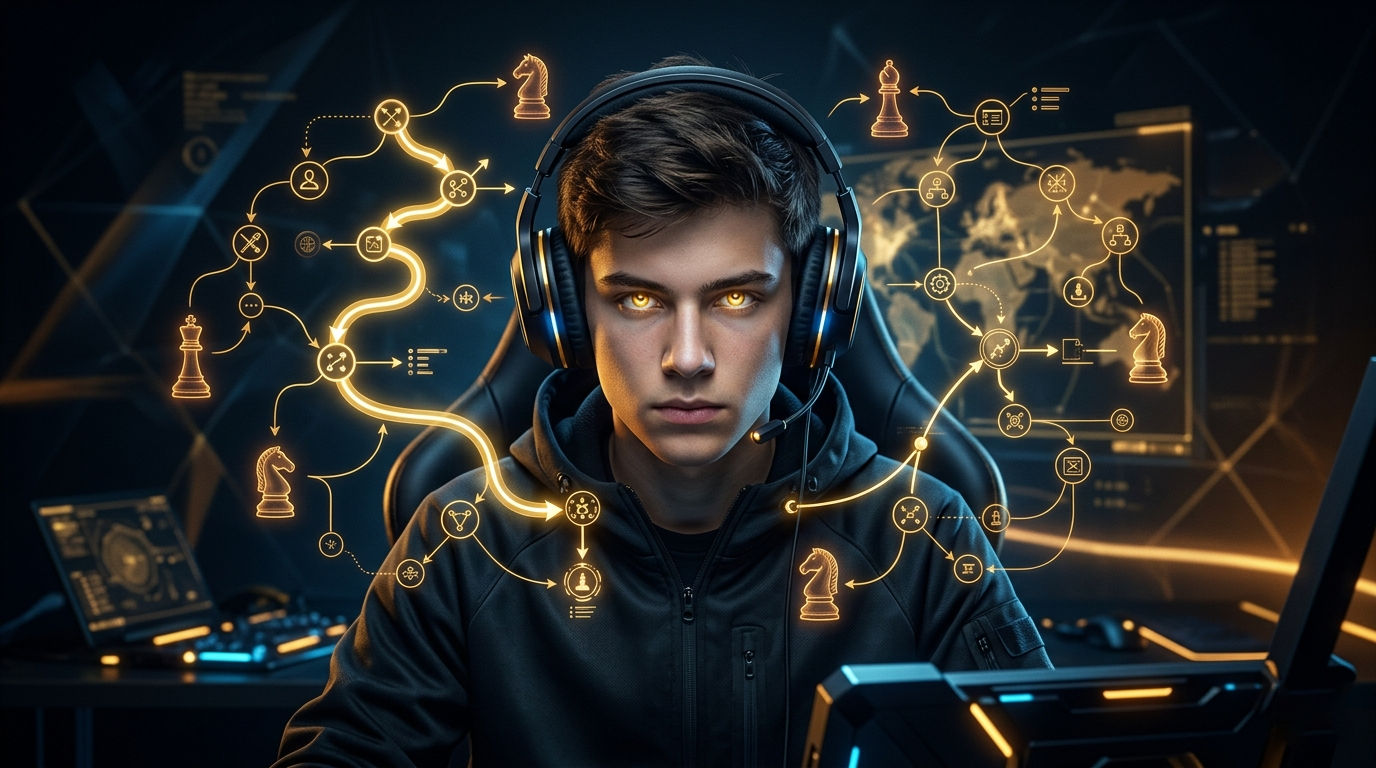
Gamers cut through noise and land on the right choice faster. Sensorimotor decision-making improves because games demand rapid evaluation of moving targets and changing conditions.
Research using fMRI showed video game players display enhanced activity in key brain regions for decision-making. They were faster by approximately 190 milliseconds and more accurate overall.
This translates directly to high-pressure situations. You choose the best route in traffic. You respond effectively in a work crisis. Daily choices that once felt overwhelming become straightforward.
Decision-making gains come from repeated practice in dynamic environments. The brain gets better at mapping perception to action without hesitation.
Enhanced Cognitive Flexibility
Switching between tasks or strategies feels effortless. Gamers activate the right mental networks faster and recover from interruptions with minimal cost.
A comprehensive review highlighted how expert gamers show significantly lower task-switching costs. They handle overlapping demands better than non-players.
In practice this means you pivot when plans change at work. You adapt your approach mid-project without losing momentum. Cognitive flexibility keeps you sharp when life throws curveballs.
The brain training is cumulative. Regular play strengthens the networks responsible for flexible thinking.
Bottom Line
These five superpowers are backed by peer-reviewed evidence. Action and strategy games deliver the biggest returns. Casual play still helps, but consistent sessions in the right titles produce the clearest gains. Gaming is not a magic pill. It is targeted brain training that non-gamers simply skip. Balance it with sleep, exercise, and real-world responsibilities. The science is clear: gamers walk away with measurable advantages in speed, space, focus, choice, and adaptability. Use them wisely.